
Evaluate
Inspect accessible areas for bat evidence, active exits, secondary openings and conditions that affect the exclusion plan.
SERVICES
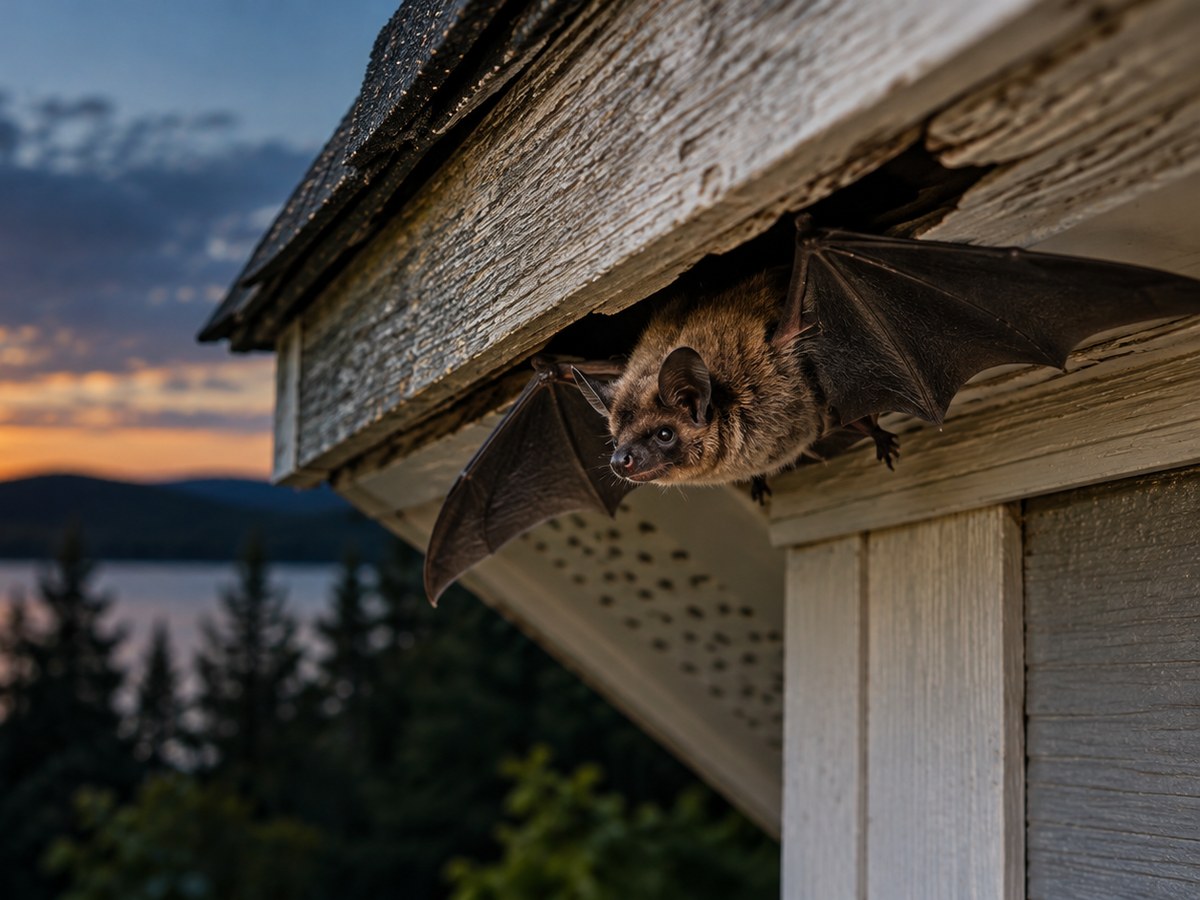
Bat conflicts are normally resolved through exclusion—not trapping the colony. We identify active exits, address secondary openings, install one-way devices when timing is appropriate, and complete final sealing after activity has cleared.
THE PROCESS
A clear process keeps the work focused on the cause, not only the symptom.
Inspect accessible areas for bat evidence, active exits, secondary openings and conditions that affect the exclusion plan.
Seal appropriate secondary openings while keeping the active exit route available for a controlled one-way exclusion.
Install one-way devices so bats can leave but cannot return through the treated opening when seasonal timing allows.
After the exclusion period and activity check, remove the devices and complete the included final sealing and repairs.
WHAT TO EXPECT
Maine IF&W recommends avoiding colony exclusion roughly May 15 through August 15, when flightless young may be present. Winter conditions can also require postponement.
A bat found with a sleeping person, young child, pet, or someone unable to reliably report contact may need to be captured for testing. Do not automatically release it.
Trapping and relocating bats is not the standard solution. Proper exclusion lets bats leave the structure and addresses the openings they use.
HOMEOWNER RESOURCE
The homeowner guide explains maternity timing, one-way devices, living-space encounters, exposure precautions and what the exclusion process looks like.
COMMON QUESTIONS
Timing depends on whether bats are actively roosting, young can fly, and whether bats may be hibernating in the structure. Maine IF&W recommends avoiding mid-May through mid-August for colony exclusion; site conditions still control.
No. Maine IF&W recommends exclusion rather than trapping and relocating bats. One-way devices are designed to let bats leave while preventing re-entry through the treated opening.
If a possible human or pet exposure occurred, do not simply let the bat go. Contact Turcotte’s and follow Maine CDC guidance for rabies consultation and testing decisions.
LOCAL. RESPONSIVE. PROFESSIONAL.
Have questions or need a wildlife evaluation? Start with a conversation and we’ll help you identify the next practical step.