
Evaluate
Confirm the active area, likely species, soil and structure conditions, access and the appropriate barrier layout.
SERVICES
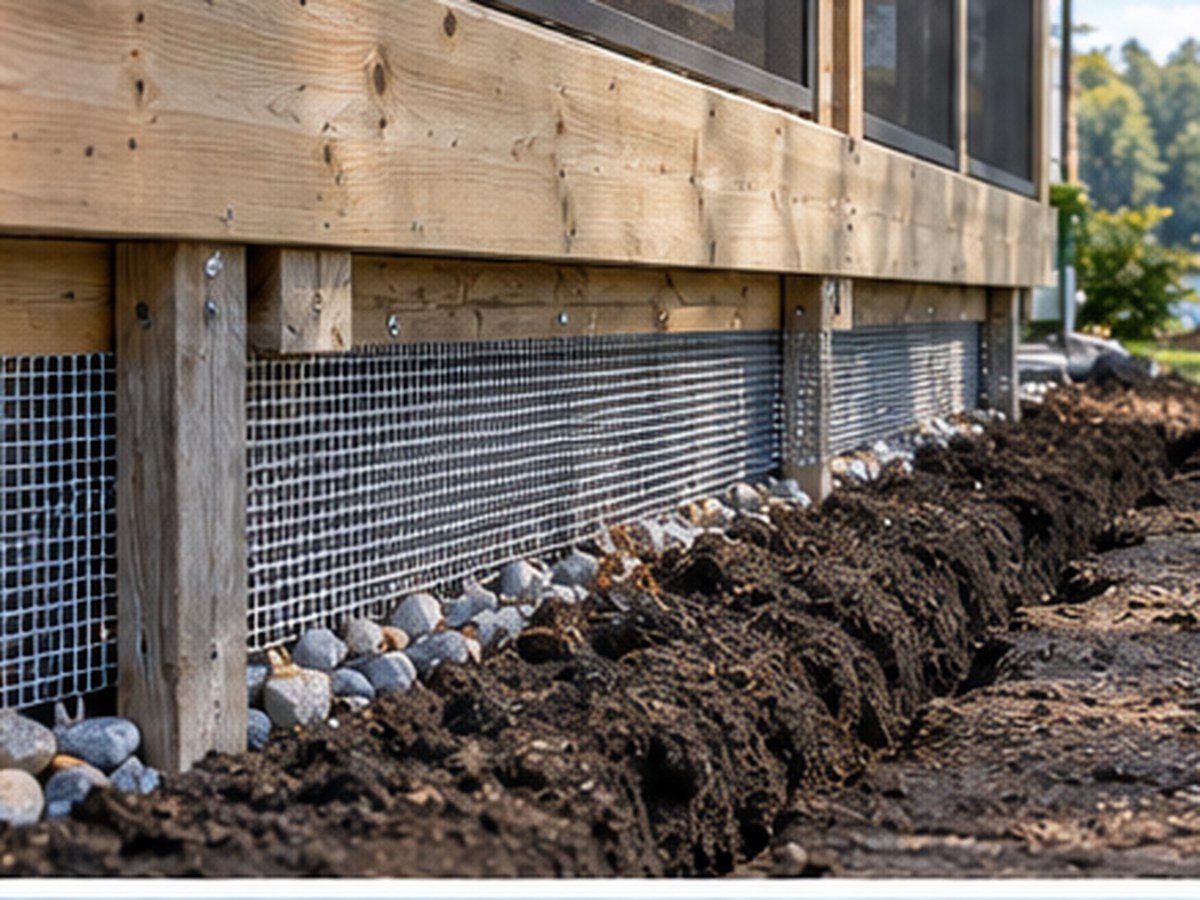
Burrowing wildlife can repeatedly enter under decks, porches, sheds and foundations. Below-grade exclusion creates a durable barrier while the active animal situation and access points are handled in the proper order.
THE PROCESS
A clear process keeps the work focused on the cause, not only the symptom.
Confirm the active area, likely species, soil and structure conditions, access and the appropriate barrier layout.
Make sure wildlife and possible young are addressed before a permanent below-grade barrier closes the route.
Excavate the agreed perimeter and install durable mesh or other specified exclusion material to the quoted depth and profile.
Backfill and leave the work area reasonably restored while documenting the completed barrier.
WHAT TO EXPECT
Common areas where skunks, groundhogs and other wildlife may establish den access beneath a structure.
Barrier depth, apron design and fastening method depend on the site, structure and agreed material.
A permanent barrier should not knowingly trap wildlife or dependent young beneath the structure.
HOMEOWNER RESOURCE
Learn why animals establish dens, how active occupancy is resolved, and how below-grade exclusion helps reduce re-entry.
COMMON QUESTIONS
The active animal situation should be considered first. Closing a route while wildlife or young are still beneath a structure can create a larger problem.
Depth and apron design depend on species, soil, structure and site access. The written scope defines the method for your property.
Reasonable restoration is part of the work area cleanup, but soil disturbance, roots, stones and existing landscaping can affect the final appearance. The quote identifies any special restoration scope.
LOCAL. RESPONSIVE. PROFESSIONAL.
Have questions or need a wildlife evaluation? Start with a conversation and we’ll help you identify the next practical step.