
Assess
Determine whether trapping is appropriate or whether exclusion, direct removal or another method is better.
SERVICES
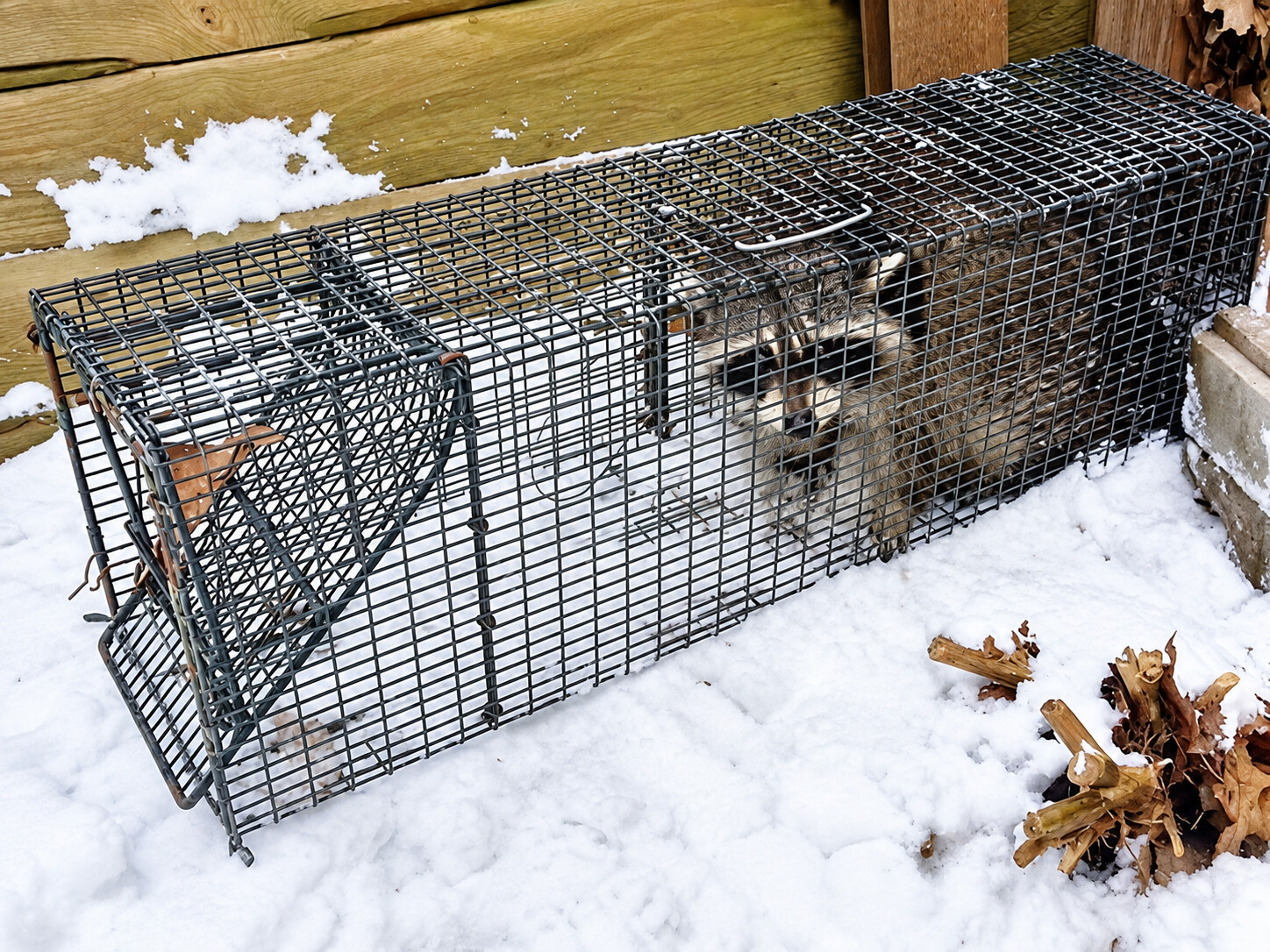
When trapping is the appropriate method, traps are selected and placed for the target species and property. The process includes required tending, communication and a plan for what happens after the active wildlife issue is resolved.
THE PROCESS
A clear process keeps the work focused on the cause, not only the symptom.
Determine whether trapping is appropriate or whether exclusion, direct removal or another method is better.
Use suitable equipment in approved locations with attention to pets, children, weather and non-target wildlife.
Tend traps on the required schedule and document captures or activity during the authorized trapping period.
Remove equipment and recommend exclusion or repair if the property remains vulnerable.
WHAT TO EXPECT
Most traps used in organized areas of Maine must be checked at least once every calendar day. The service plan accounts for that requirement.
Do not move, release, open or tamper with wildlife-control traps. Contact Turcotte’s if there is a capture, concern or access problem.
Trapping can resolve active wildlife, but structural entry points may still need exclusion or repair to reduce repeat problems.
HOMEOWNER RESOURCE
A practical guide to trap tending, equipment safety, homeowner responsibilities, captures, pets and what to expect during the trapping period.
COMMON QUESTIONS
For the cage-type and similar live traps typically used around homes, the service plan follows applicable Maine tending requirements, including daily checks where required.
Please do not disturb a wildlife-control trap. If something is captured or the trap is in the way, call Turcotte’s so the situation can be handled safely and in accordance with the service plan.
Wildlife behavior is unpredictable. The written quote defines the authorized trapping period and any approved extension rather than promising a specific capture time.
LOCAL. RESPONSIVE. PROFESSIONAL.
Have questions or need a wildlife evaluation? Start with a conversation and we’ll help you identify the next practical step.